
Mimic Robotics Pushes for Human-Like Robot Hands
The Swiss startup secures $16 million to develop AI-powered robotic hands designed to perform complex industrial tasks with human precision.

Mimic Robotics AG has just secured $16 million in seed funding led by Elaia and Speedinvest.
This marks another bold move in the race to make robots move, sense, and think like humans. The company aims to replace stiff factory arms with nimble, AI-powered hands capable of handling the complex work that machines have long struggled with.
The funding round also drew participation from Founderful, 1st kind, 10X Founders, 2100 Ventures, and Sequoia Scout Fund, bringing Mimic’s total capital raised to more than $20 million.
Founded in 2024, Mimic’s goal is to create robots that actually work in the messy, unpredictable world of manufacturing and logistics.
“Humanoids are exciting, but there aren’t many industrial scenarios where the full-body form truly adds value,” said co-founder and Chief Product Officer Stephan-Daniel Gravert.
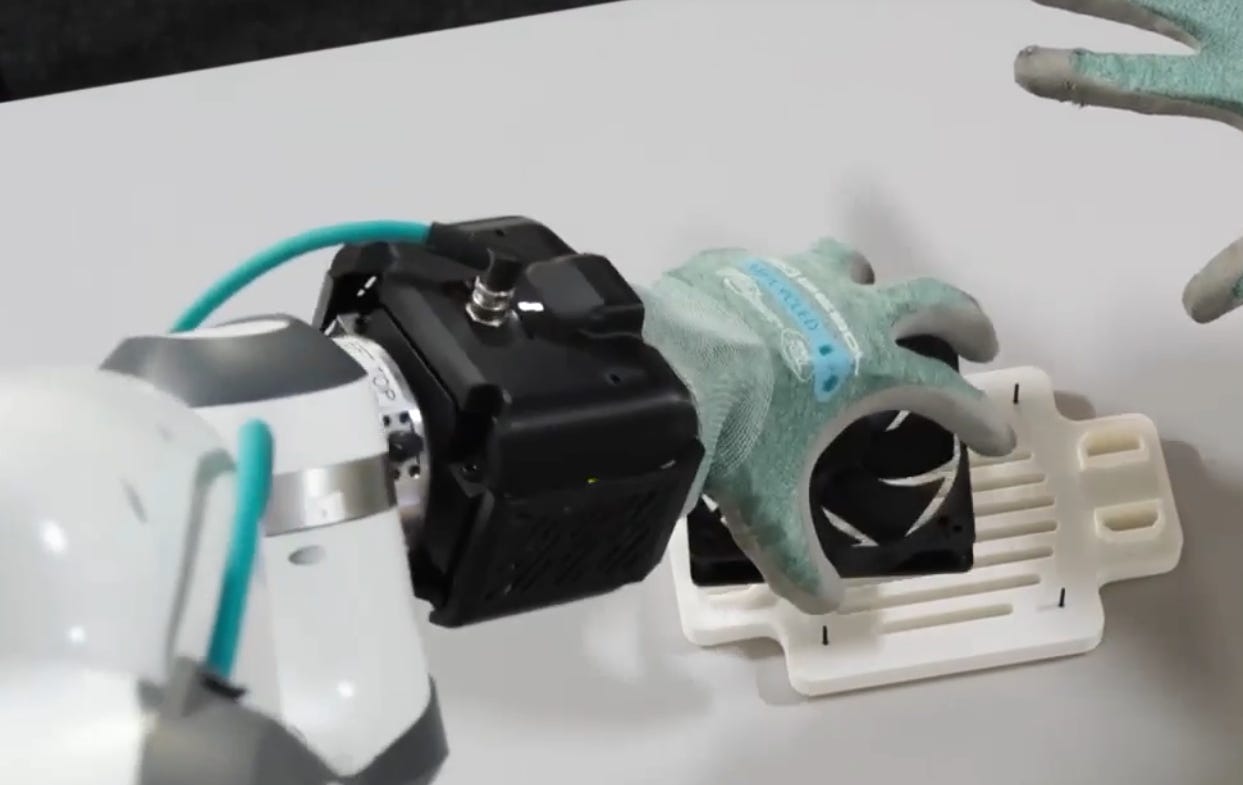
Mimic pairs AI-driven, dexterous robotic hands with standard robot arms, offering a simpler and more reliable solution that industries can deploy fast. At the heart of the company’s vision is physical AI ( a form of intelligence that processes digital data and interacts directly with the physical world).
Combining foundational robotics models with flexible robotic hands and off-the-shelf arms, Mimic enables robots to perform tasks that usually require human finesse. Each Mimic hand has 21 joints and operates with submillimeter precision. It can lift to 7 kilograms, roughly 15 pounds, with human-like control. The company also addresses one of robotics’ biggest challenges, i.e training data.
Instead of relying on simulations, Mimic collects real-world motion data from factory workers as they perform daily tasks. The system learns directly from human movement, allowing the robots to replicate skilled techniques with remarkable accuracy.
“Our general-purpose AI models allow us to automate manual labour in a way that simply was not possible before,” said co-founder and Chief Technology Officer Elvis Nava.
Goldman Sachs projects that humanoid and dexterous robots could generate up to $38 billion globally by 2035, with shipments surpassing 1.4 million units. The wider robotics market could reach between $200 billion and $1 trillion by 2040. Mimic’s founders believe the company is well-positioned to drive that shift.
“We’re at an inflexion point in robotics where learning-based systems meet real industrial needs. We make dexterity deployable at scale, closing the gap between what AI can do in the lab and what factories actually need,” said Chief Executive Stefan Weirich.
The company plans to use the fresh funding to speed up development of its foundational robotic AI model and next-generation humanoid hands. Pilot programs are already underway with major manufacturers, including Fortune 500 companies and leading automotive and logistics brands.
Mimic has yet to reveal names, but the company says its robots are already proving they can work side by side with humans, not just in theory, but on the factory floor.